
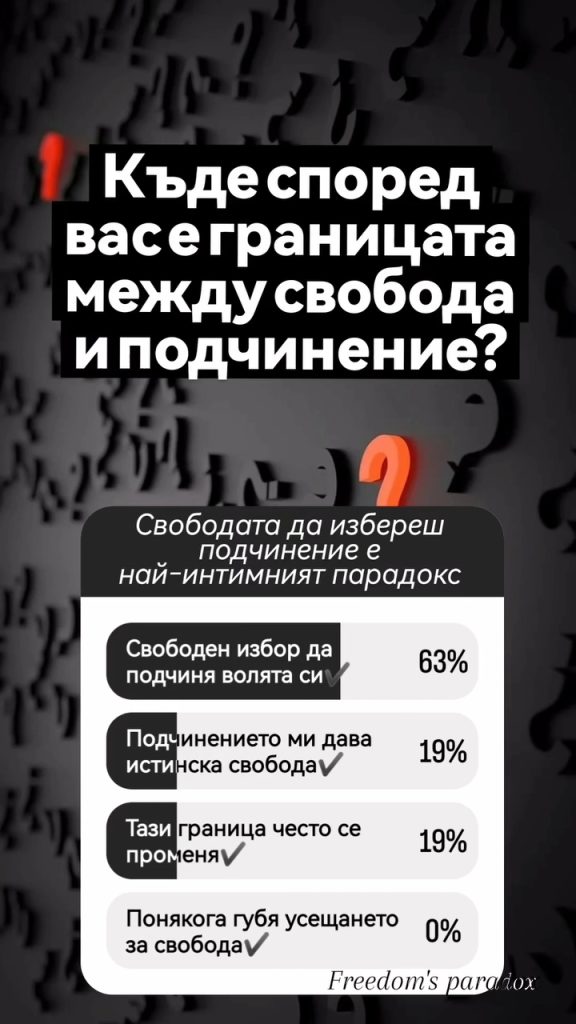
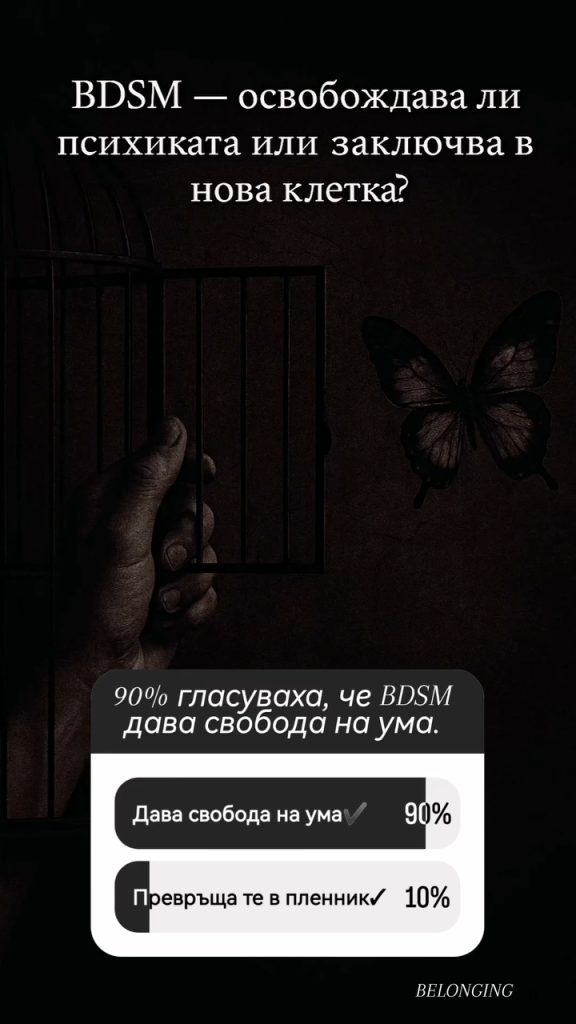

1. Какво е БДСМ? БДСМ е динамика на власт и подчинение, която изследва границите на доверие, контрол и желание. Това е психологическо пространство, където участниците се учат да разбират себе си и партньора си по-дълбоко, да се свързват и да изследват емоциите, рядко проявявани в ежедневието.
- How do the roles of Dominant/Submissive differ?
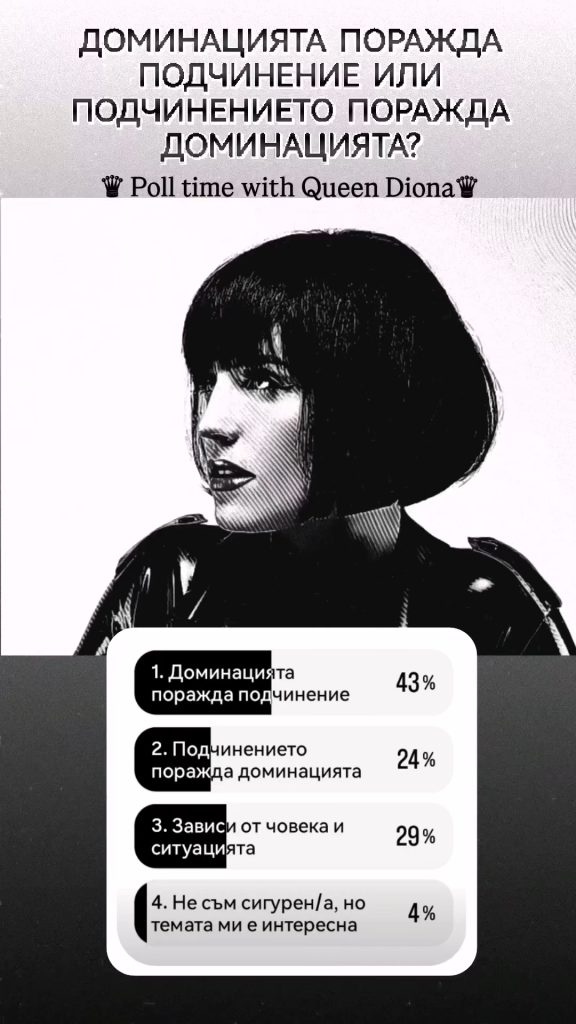
Roles are more than words — they are mutually agreed dynamics of control, care, and trust. The Dominant guides the structure, while the Submissive chooses to willingly surrender, exploring personal boundaries and emotions.
3. BDSM само сексуален ли е? Не. BDSM може да включва сексуални елементи, но често е психологическо и емоционално изследване – практика на доверие, сила и самосъзнание.
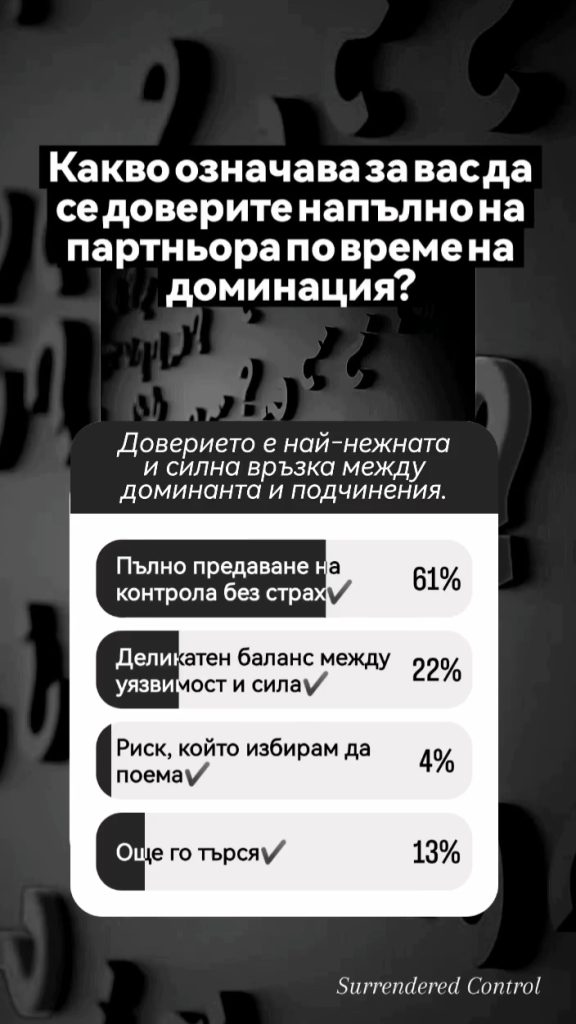
4. How is trust built?Trust is built through communication, clearly defined boundaries, and safe practices. The more participants reveal themselves and listen to their own and each other’s needs, the stronger and deeper the connection becomes.
5. What is a safe word and why is it important?A safe word is a secure code to stop any activity. It ensures boundaries are respected and that the dynamic remains safe and consensual.
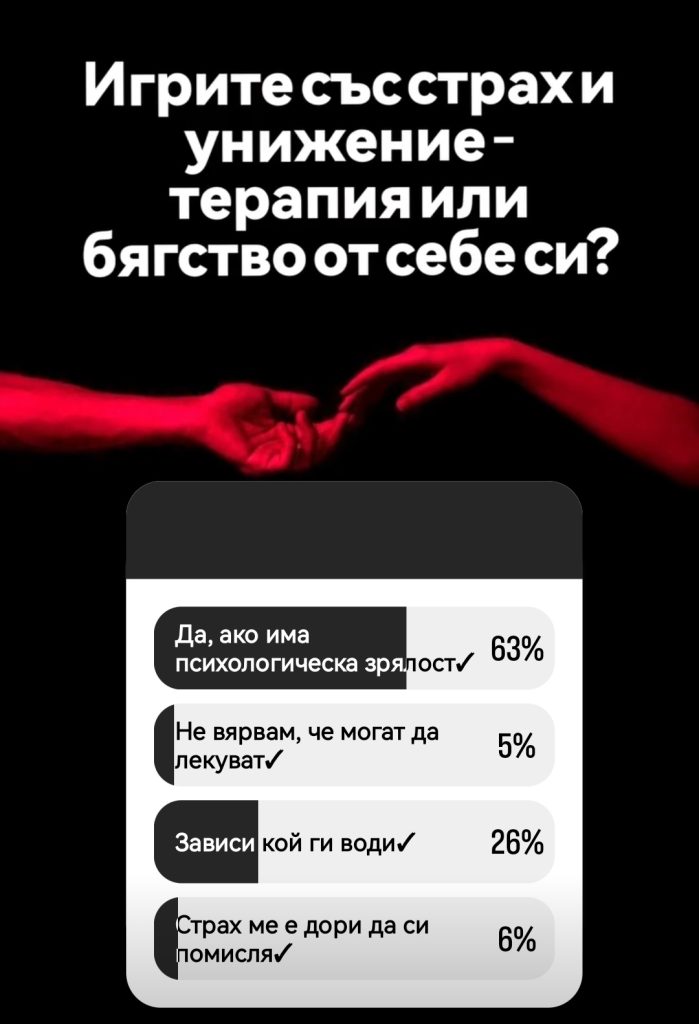
6. Can BDSM be therapeutic?Yes. For many, these practices provide emotional release, self-awareness, and experiences of trust and closeness that are rarely found outside the dynamic.
7. Как да започна, ако съм нов? Започнете с четене, наблюдение и общуване. Малките експерименти с доверен партньор, ясните граници и безопасните практики са ключът към здравословния старт.
8. How is a partner chosen?Trust, clarity, and mutual respect are essential. The choice is not only physical or sexual — emotional and psychological compatibility is equally important.
9. How should a beginner start in BDSM?Beginners start by consciously exploring the dynamic — through communication, trust, and safe practices. Small, mindful experiments with a partner, clearly defined boundaries, and observing personal reactions are key to safe and healthy participation.
10. Is BDSM for everyone?BDSM is a space for adults (18+) who want to explore themselves, their boundaries, and the psychology of desire. Age, experience, or gender are not limitations, as long as participation is conscious and voluntary.